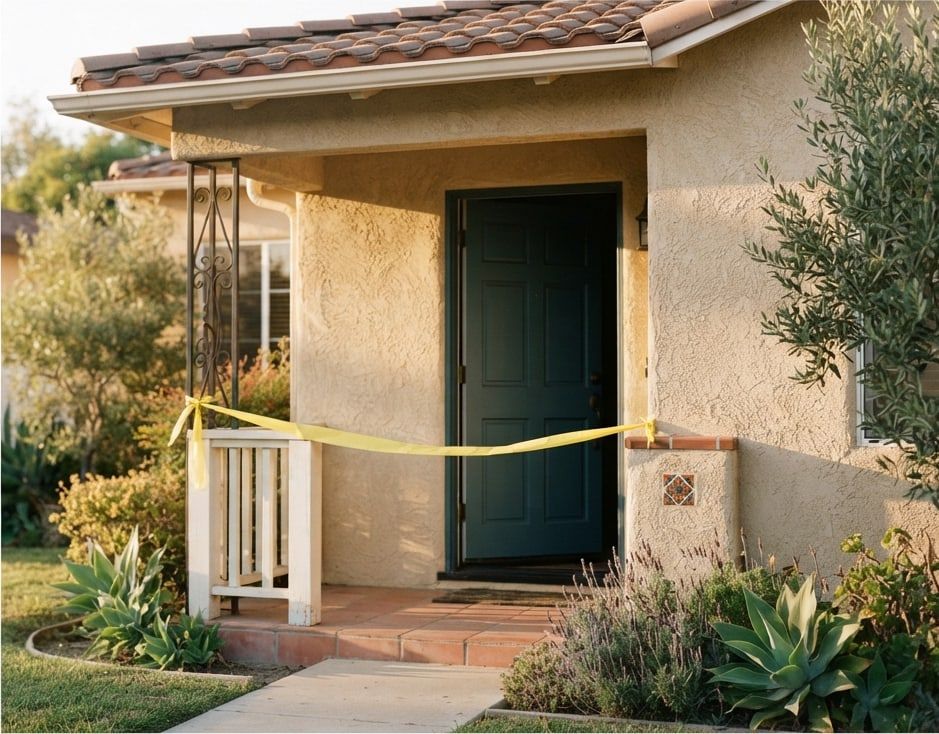
Riverside Bio Clean arranges crime scene cleanup for homes, apartments, businesses and vehicles in Riverside, Moreno Valley, Corona, Fontana, San Bernardino, Ontario and the rest of Riverside and San Bernardino counties. A trauma scene cleanup company removes blood, tissue and other body fluids, takes out anything porous that cannot be disinfected, clears fingerprint powder and chemical residue, and hauls the waste away as regulated trauma scene waste.
Before anyone cleans: wait for the release
A crime scene belongs to the investigating agency until it says otherwise. In the City of Riverside that is usually the Riverside Police Department; in unincorporated areas and contract cities it is the county sheriff. Fontana, San Bernardino and Ontario each have their own city police department. If you are not sure whether the property has been released, call the agency's non-emergency line and ask before you touch anything.
- Riverside Police Department: (951) 354-2007
- Riverside County Sheriff: (951) 776-1099
- San Bernardino County Sheriff, valley: (909) 387-8313
City numbers for Fontana, San Bernardino and Ontario are on each area page.
Crime scenes covered
- Homicide and shootings
- Blood, tissue and bone fragments across floors, walls and ceilings, often in more than one room, plus evidence cut-outs left by investigators.
- Stabbings and assaults
- Blood trails through the home, on door frames and handles, and into carpet and upholstery.
- Break-ins with injury
- Blood on broken glass and window frames, with forced-entry debris to clear before the property can be secured.
- Domestic incidents
- Handled discreetly while the household is still living there, with the affected rooms sealed off.
- Vehicles
- Cars and trucks released from a police hold, where seats, carpet and headliners have absorbed blood.
- Businesses and common areas
- Stores, offices, lobbies, stairwells and parking areas, scheduled around opening hours where possible.
What police and investigators leave behind
Most families expect a room to look worse than it does, then find the hidden parts are the real problem. Blood travels further than it seems: it wicks into carpet pad, runs under baseboards and into the gaps between floor tiles, and splatter reaches ceilings, light fixtures and the backs of furniture. Investigators add their own layer, including fingerprint powder on doors and surfaces, chemical reagents, and sometimes cut-out sections of carpet or wall taken as evidence.
What the crime scene cleanup company removes
- Visible blood and tissue, cleaned and then disinfected with an EPA-registered disinfectant
- Carpet, pad, mattresses, upholstery and other porous items that absorbed fluids
- Drywall, trim or subfloor where fluids soaked in, when cleaning cannot reach them
- Fingerprint powder and investigators' chemical residue on doors, frames and surfaces
- Broken glass and sharp debris, including from forced entry
- Odor, once the source material is gone
The crew separates what can be cleaned and returned from what has to go. Ask about sentimental or valuable items before the work begins, so nothing is thrown out that could have been saved.
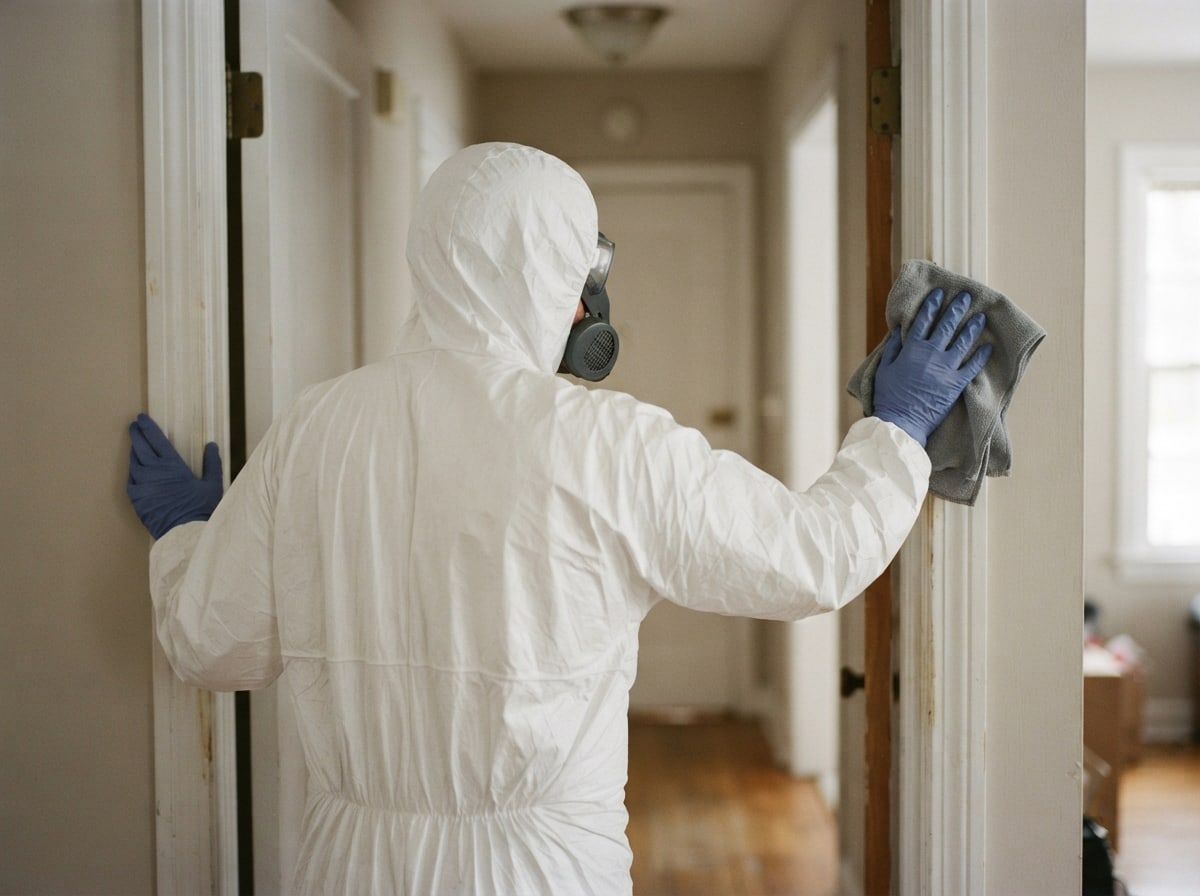
How a crime scene cleanup runs
- Release
- The investigating agency tells you the scene is released. Until then, nothing is cleaned or moved.
- First call
- You describe what happened, the type of property and the ZIP code. The company asks about access and anyone still living there.
- Assessment
- The company inspects the scene, including hidden spread under flooring and behind trim, and gives you a written scope and price.
- Removal
- Porous items that absorbed blood, and any evidence cut-outs, are removed and packed as regulated trauma scene waste.
- Cleaning
- Surfaces are cleaned and disinfected, fingerprint powder and reagents are removed, and glass and debris are cleared.
- Verification
- The crew checks the area before it leaves, and you get a walk-through or photos and the waste disposal records.
Cars, trucks and workplaces
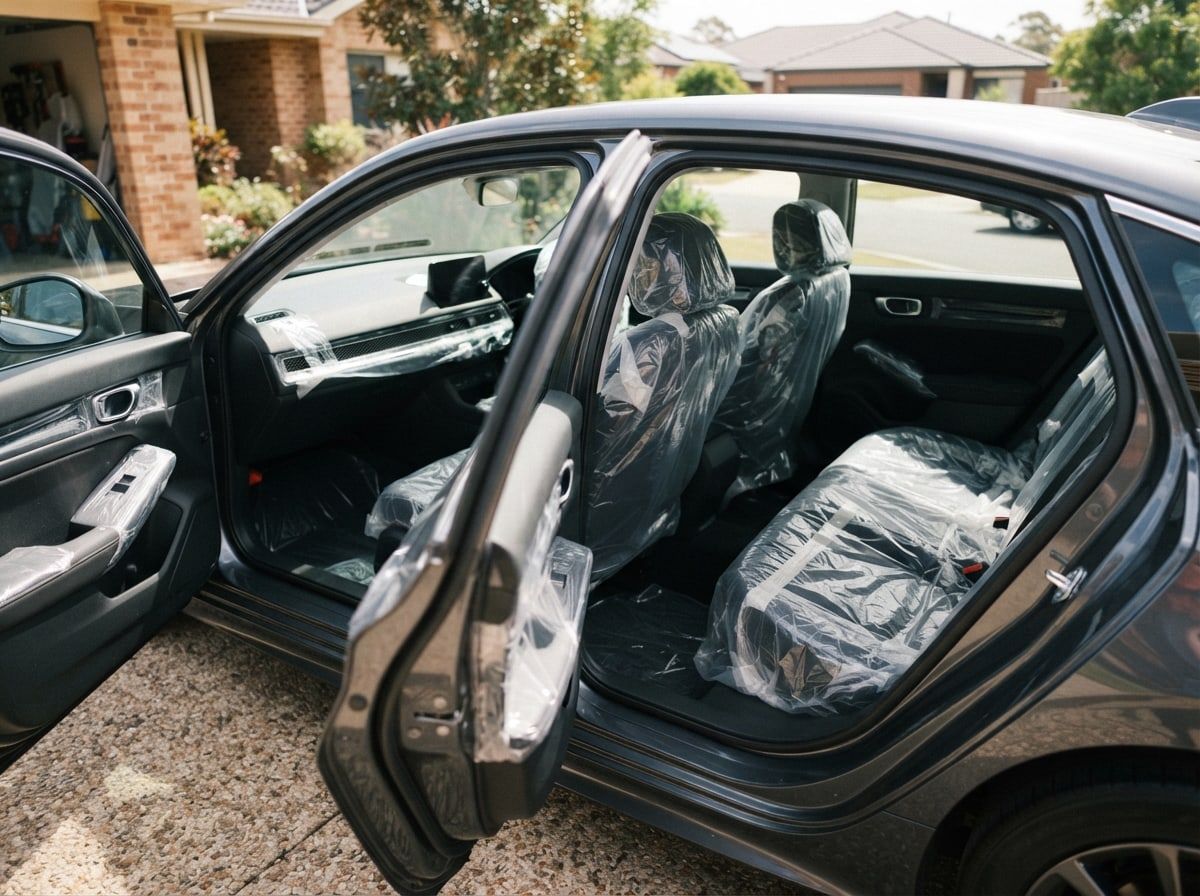
Vehicle biohazard cleanup follows the same rules. Seats and headliners absorb fluids like upholstery does, and some vehicles are not worth restoring once the cost is known, so ask your auto insurer early. Businesses have an extra obligation: employers must protect workers from blood exposure under the federal OSHA bloodborne pathogens standard, which is a good reason not to hand a mop to a staff member.
Paying for crime scene cleanup
In California, the Victim Compensation Board can reimburse up to $1,709 of the cost when the crime happened in a home or vehicle, as long as the company is registered with the California Department of Public Health. Homeowners and renters insurance may pay some or all of the rest. The details, including who can apply and the time limits, are in who pays for crime scene cleanup in California. Published price ranges by type of scene are in the cleanup cost guide.
Choosing who comes into your home
Any company doing crime scene cleanup as a business in California must be registered as a trauma scene waste management practitioner with the Department of Public Health, which publishes the list. Our page on how to choose a crime scene cleaner covers what to ask for, including proof of that registration and insurance, and a written estimate.
Crime scene cleanup questions
Do the police clean up after a crime?
No. Officers and crime scene investigators collect evidence and then release the property. Blood, tissue and fingerprint powder are left for the owner or tenant to deal with. The same is true after the fire department or paramedics leave.
How do I know when I can start the cleanup?
Wait until the investigating agency tells you the scene is released. If you are not sure, call the non-emergency line of the agency that responded and ask. Cleaning before release can destroy evidence.
Can victim compensation pay for crime scene cleanup in California?
Yes, when the crime happened in a residence or a vehicle. The California Victim Compensation Board can reimburse up to $1,709, and the cleanup must be done by a company registered with the California Department of Public Health as a trauma scene waste practitioner. Our guide on who pays explains how to apply.
Is fingerprint powder hazardous?
It is not a biohazard, but it is fine, clings to surfaces and smears when wiped. Some powders are magnetic or fluorescent. Cleanup crews remove it with the right cleaners rather than water alone, which tends to spread it.
Sources
- Riverside Police Department: dispatch
- Riverside County Sheriff's Department: who to call
- San Bernardino County Sheriff's Department
- California Government Code section 13957 (victim compensation, crime scene cleanup)
- California Department of Public Health: trauma scene waste management (registered practitioner list)
- OSHA 29 CFR 1910.1030, Bloodborne pathogens
Sources checked September 28, 2026. Rules and amounts change; confirm with the agency before relying on them.